
Civil Engineering
The basic objectives of B.E. (Civil Engineering) programme is to provide professional for designing & executing structural works that serve the general public, holding the safety, health and welfare of the public paramount. Civil Engineering is a broad field of engineering dealing with the planning, design, construction, maintenance & management of physical infrastructure network.
Civil Engineer playa vital role in creating the man -made environment and in protecting the natural environment, bringing together science and artto create much of the tangible fabric of today’s society. The course also enables students to understand theoretical and practical aspects of various civil engineering structures. The course emphasizes reasonably on fundamentals of analysis & design.
Teaching Scheme
Syllabus
Academic Calendar
VISION:
- To achieve excellent standards of quality education in Civil Engineering by keeping pace with rapidly changing technologies & to create technical manpower of global standards in Civil Engineering with capabilities of accepting new challenges.
- To emerge as a cube of quality technical education to competent engineers technologies.
- To create technical manpower of global standards in civil engineering with capabilities of accepting new challenges.
MISSION:
- To create competent professionals who are trained in the design and implementation of Civil Engineering systems
- To impart quality education in civil engineering to raise satisfaction level of all stake holders.
- To serve society and the nation by providing professional civil engineering leadership to find solution to community, regional and global problems and accept new challenges in rapidly changing technology.
- To create competent professionals who are trained in the design, and development of civil engineering systems and contribute towards research & development activities.
Department News
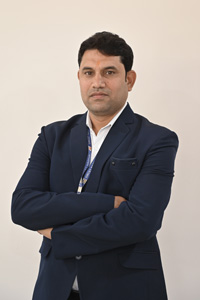
Dr. Sandeep Hanuwate
Designation :- H.O.D. Civil Engineering Department
Contact No:- +91-9579037435
Email id:- drsandeep.gwcet@gmail.com
Qualification :- PhD, M-Tech, B.E.
Teaching Experience : 15 Years
Industry Experience : 6 Years
From The Head Of The Department
It gives me an immense pleasure to enlighten about the Department of Civil Engineering. The department was established in the year 2010. Epitome of department is distinguished tradition of excellence in teaching, research and practice. Civil Engineering Department enriched with entire laboratories well equipped with modern instruments, classrooms; separate computer lab with latest software’s, visual aids like charts and models, audio video learning material. The department has done MOU with the industries through which many professionals from industries contribute in providing on site experience to students. Our main focus is on educating our students and making them aware about their vital role to meet the challenges faced by society. So, we believe in imparting knowledge on the basis of interactions between the built environment and the natural world. It’s our privilege to put in the picture that our graduates possess the skills, knowledge and attitudes necessary to lead society’s response to these challenges.
Dr. Sandeep Hanuwate
H.O.D. Civil Engineering
News & Updates
Dr Sandeep Haunwate
Prof Saurabh Pathare
Prof Sudarshan Patil

Prof Dwiti Mishra
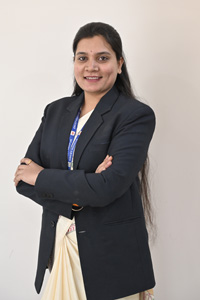
Prof Rupal Hatwar
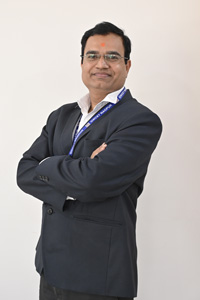
Prof Atul Yerpude
Programme Outcomes (PO’s)
Engineering Graduates will be able to:
PO1. Engineering Knowledge: Apply the knowledge of mathematics, science, engineering fundamentals, and an engineering specialization to the solution of complex engineering problems.
PO2. Problem Analysis: Identify, formulate, review research literature, and analyze complex engineering problems reaching substantiated conclusions using first principles of mathematics, natural sciences, and engineering sciences.
PO3. Design/development of solutions: Design solutions for complex engineering problems and design system components or processes that meet the specified needs with appropriate consideration for the public health and safety, and the cultural, societal, and environmental considerations.
PO4. Conduct investigations of complex problems: Use research-based knowledge and research methods including design of experiments, analysis and interpretation of data, and synthesis of the information to provide valid conclusions.
PO5. Modern tool usage: Create, select, and apply appropriate techniques, resources, and modern engineering and IT tools including prediction and modeling to complex engineering activities with an understanding of the limitations.
PO6. The engineer and society: Apply reasoning informed by the contextual knowledge to assess societal, health, safety, legal and cultural issues and the consequent responsibilities relevant to the professional engineering practice.
PO7. Environment and sustainability: Understand the impact of the professional engineering solutions in societal and environmental contexts, and demonstrate the knowledge of, and need for sustainable development.
PO8. Ethics: Apply ethical principles and commit to professional ethics and responsibilities and norms of the engineering practice.
PO9. Individual and team work: Function effectively as an individual, and as a member or leader in diverse teams, and in multidisciplinary settings.
PO10. Communication: Communicate effectively on complex engineering activities with the engineering community and with society at large, such as, being able to comprehend and write effective reports and design documentation, make effective presentations, and give and receive clear instructions.
PO11. Project management and finance: Demonstrate knowledge and understanding of the engineering and management principles and apply these to one’s own work, as a member and leader in a team, to manage projects and in multidisciplinary environments.
PO12. Life-long learning: Recognize the need for, and have the preparation and ability to engage in independent and life-long learning in the broadest context of technological change.
Programme Specific Objective (PSO’s)
PSO1: Students shall have abilities to work on projects towards infrastructure development, environment and sustainability.
PSO2: Students shall have abilities to work on projects towards infrastructure development, environment and sustainability.
Programme Educational Objectives (PEOs)
- The graduates of civil engineering will be able to apply fundamental technical knowledge and skills to find creative solutions to technological challenges and problems in various areas of basic sciences and engineering.
- Analyze, design and use skills in order to formulate and solve civil engineering problems.
- Practice civil engineering in a responsible, professional and ethical manner and implement eco- friendly sustainable technologies for the benefit of industry and society.
- Engage in research and development in civil engineering and allied areas of science and technology.