
Science and Humanities (Polytechnic)
The Department of Information Technology is one of the pioneering department of the institutions. It provides strategic direction for the management of the information technology resources. These include telecommunications, data, and supporting physical infrastructure; application infrastructure, computer engineering and operations, data centers, servers, storage, and backup equipment; cloud services etc It is endowed with an experienced team of faculty members having excellent academic records and proficiency. It aims at uniting on one site with purpose-built facilities and the state-of- the-art computer labs with the latest advances in technology and comprehensive study material which helps to unlock the full potential of the students.
Teaching Scheme
Syllabus
Academic Calendar
Quick Links
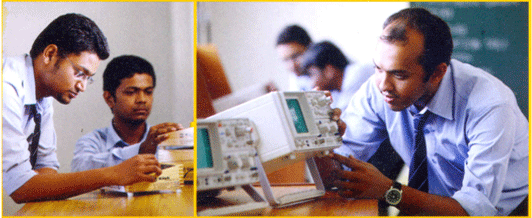
VISION:
To foster Information Technology graduates by imparting quality technical education through need based technical skills with ethical values so that they can contribute to the society through excellence in scientific and knowledge-based education
MISSION:
- To empower emerging graduates with a blend of high-quality technical expertise and strong ethical values through our education.
- To achieve excellence in professional practice within Information Technology and its related fields.
- To inspire learners to conduct research that addresses societal needs.
- To imbibe ethical values in students and enhance societal engagement through extracurricular activities focused on addressing community needs.

Prof. Prashant S. Gumgaonkar
DR.RAJESH S.MAHAJAN, HOD
Science & Humanities
Qualification- Ph.D. ,M.Sc. (Chemistry),B.Ed.
Cont.No.-909667069
From The Head Of The Department
This department plays very important role in technical education. It also helps students to develop communication skill which is need of today’s generation for developing themselves.
It has well equipped laboratories of Physics, Chemistry and Language Lab and well qualified, experience staff. Also it covers Basic subjects like Physics, Chemistry, Mathematics, Communication Skill which help the students to analyze the engineering problems.
News & Updates
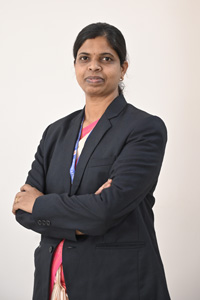
Mrs Deepali Gautam

Mrs Vileena Amrutkar

Ms Samiksha Kadoo
Programme Educational Objectives (PEOs)
PO 1. Basic knowledge: Apply knowledge of basic mathematics, sciences and basic engineering
to solve the broad-based Electrical engineering problems.
PO 2. Discipline knowledge: Apply Electrical engineering knowledge to solve broad-based
electrical engineering related problems.
PO 3. Experiments and practice: Plan to perform experiments and practices to use the results to
solve broad-based Electrical engineering problems.
PO 4. Engineering tools: Apply relevant Electrical technologies and tools with an understanding
of the limitations.
PO 5. The engineer and society: Assess societal, health, safety, legal and cultural issues and the
consequent responsibilities relevant to practice in the field of Electrical engineering.
PO 6. Environment and sustainability: Apply Electrical engineering solutions also for
sustainable development practices in societal and environmental contexts.
PO 7. Ethics: Apply ethical principles for commitment to professional ethics, responsibilities and
norms of the practice also in the field of Electrical engineering.
PO 8. Individual and team work: Function effectively as a leader and team member in diverse/
multidisciplinary teams.
PO 9. Communication: Communicate effectively in oral and written form.
PO 10. Life-long learning: Engage in independent and life-long learning activities in the context
of technological changes also in the Electrical engineering and allied industry
Programme Specific Objective (PSO’s)
PSO 1. Electrical Equipment: Maintain various types of rotating and static electrical equipment.
PSO 2. Electric Power Systems: Maintain different types of electrical power systems.
Programme Educational Objectives (PEOs)
PEO 1. Provide socially responsible, environment friendly solutions to Electrical engineering
related broad-based problems adapting professional ethics.
PEO 2. Adapt state-of-the-art Electrical engineering broad-based technologies to work in
multi-disciplinary work environments.
PEO 3. Solve broad-based problems individually and as a team member communicating
effectively in the world of work. .
PLACEMENT REPORTS
Departmental Activity
LMS
Annual Report