
Computer Science & Engineering(Poly)
It gives me great pleasure to address the students of the Computer Science & Engineering Department. Our aim is to provide quality education, promote innovation, and develop strong technical and problem-solving skills. With the support of dedicated faculty and practical learning opportunities, we prepare students to meet industry challenges with confidence. I wish all students success in their future endeavors.
**Head of Department**
Computer Science & Engg Department
Teaching Scheme
Syllabus
Academic Calendar
Quick Links
VISION:
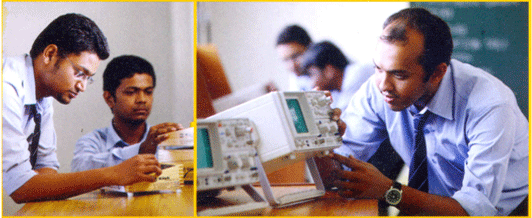
“To be a centre of excellence in Computer Science education, fostering skilled, innovative, and industry-ready diploma engineers with global competence and ethical values to serve society.”
MISSION:
1. To deliver outcome-based technical education through modern laboratories, practical exposure, and industry interaction.
2. To develop employability skills aligned with current and emerging technologies such as Artificial Intelligence, Data Science, and Cyber security.
3. To promote innovation, entrepreneurship, and incubation activities among students.
4. To inculcate professional ethics, teamwork, leadership, and social responsibility.
5. To encourage lifelong learning to adapt to rapidly changing technological environments.

Prof. Prashant S. Gumgaonkar
H.O.D. Information Technology
Contact No:- +91-8999816327
Email id:- prashantsg90@gmail.com
Qualification :- PhD (persuing), M-Tech, B.
Teaching Experience : 14 Years
Industry Experience : Nil
From The Head Of The Department
The department of Information Technology (IT) is one of the most preferred departments in institute, which is the outcome of continuous efforts taken by each and every stakeholders of department. We are well equipped with the compatible infrastructure which includes high configuration laboratories and ICT enabled classrooms. Department of IT is taking all steps to develop strong foundation of theory and practices of Computer Science and engineering amongst the students, to enable them to develop into knowledgeable, responsible professionals and lifelong learners. In this regards, department also run some ADD-ON courses other than University syllabus to meet the requirement of IT industries. To cope with the dynamism of industry, department has frequently organize industry institute interaction through seminars, guest lectures, industrial visits, webinars and workshops by industry experts for students as well as for faculties. All such practices help students to be industry ready. The institute has collaboration with various IT industries for internship and industry based projects. With all these technological platforms we pay attention on developing interpersonal skills of students for which we have departmental student’s forum “Algorhythm” where each talent is captured and groomed towards success. Every year new feathers of success are added to departmental crown by our students. As Dr. A.P.J. Abdul Kalam said, “Learning gives creativity, Creativity leads to thinking, Thinking provides knowledge and Knowledge makes you Grea
News & Updates
Prof. Prashant Gumgaonkar
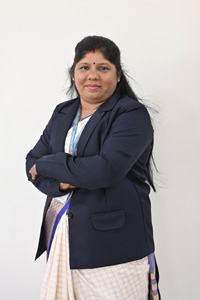
Prof. Vandana S. Choubey

Prof. Shilpa Chindamwar

Prof. Prachiti Vilas Adghulkar
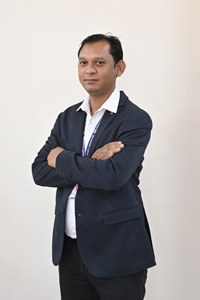
Prof Roger David
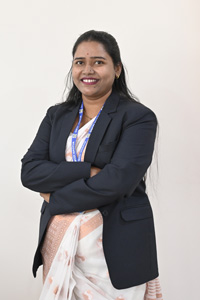
Prof Anagha Dharghawe
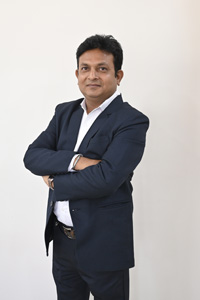
Prof Arvind Ganvir
Programme Outcomes (PO’s)
PO1. Engineering Knowledge: Apply the knowledge of mathematics, science, engineering fundamentals, and an engineering specialization to the solution of complex engineering problems.
PO2. Problem Analysis: Identify, formulate, review research literature, and analyze complex engineering problems reaching substantiated conclusions using first principles of mathematics, natural sciences, and engineering sciences.
PO3. Design/development of solutions: Design solutions for complex engineering problems and design system components or processes that meet the specified needs with appropriate consideration for the public health and safety, and the cultural, societal, and environmental considerations.
PO4. Conduct investigations of complex problems: Use research-based knowledge and research methods including design of experiments, analysis and interpretation of data, and synthesis of the information to provide valid conclusions.
PO5. Modern tool usage: Create, select, and apply appropriate techniques, resources, and modern engineering and IT tools including prediction and modeling to complex engineering activities with an understanding of the limitations.
PO6. The engineer and society: Apply reasoning informed by the contextual knowledge to assess societal, health, safety, legal and cultural issues and the consequent responsibilities relevant to the professional engineering practice.
PO7. Environment and sustainability: Understand the impact of the professional engineering solutions in societal and environmental contexts, and demonstrate the knowledge of, and need for sustainable development.
PO8. Ethics: Apply ethical principles and commit to professional ethics and responsibilities and norms of the engineering practice.
PO9. Individual and team work: Function effectively as an individual, and as a member or leader in diverse teams, and in multidisciplinary settings.
PO10. Communication: Communicate effectively on complex engineering activities with the engineering community and with society at large, such as, being able to comprehend and write effective reports and design documentation, make effective presentations, and give and receive clear instructions.
PO11. Project management and finance: Demonstrate knowledge and understanding of the engineering and management principles and apply these to one’s own work, as a member and leader in a team, to manage projects and in multidisciplinary environments.
PO12. Life-long learning: Recognize the need for, and have the preparation and ability to engage in independent and life-long learning in the broadest context of technological change.
Programme Specific Objective (PSO’s)
PSO1: Apply standard practices for software project development using hands-on programming skills for analysis, design and creation of software solutions..
PSO2:Become entrepreneur and to pursue career in IT industries.
Programme Educational Objectives (PEOs)
The Graduates of Computer Science & Engineering will be able to-
PEO-1: To prepare students with latest skills in the field of software technologies supplemented with practical orientation to face challenges of modern computing industry..
PEO-2: To inculcate professional-social ethics, team work in students and acquaint them with requisite technical and managerial skills to attain a successful career.
PEO-3: To be able to continue their formal education and be accepted to relevant post- graduate degree programs and succeed in these studies.
PLACEMENT REPORTS
Departmental Activity
LMS
Annual Report