
Computer Science & Engineering
The basic objectives of the education of the B.E. (Computer Science & Engineering) programe is to provide the technical and management knowledge basis for acquiring a wide range of rewarding careers into the rapidly expanding world of computer engineering.
The course enable students to understand the practices and dynamics required for developing the software in relevance with the urgent needs of the time regarding cloud computing, ERp, SAP which will facilitate and pave a way to numerous possibilities in fostering the opportunities to get the students acquainted with the recent technological advancement in the field of computer software industry. The course emphasizes reasonably on fundamental ideas through which technology is built and evolved.
Teaching Scheme
Syllabus
Academic Calendar
VISION:
To contribute to the society through excellence in scientific and knowledge-based education utilizing the potential of computer science and engineering with a deep passion for wisdom, culture and values.
MISSION:
1.To Provide quality education to meet the need of Profession and Society.
2. To provide learning ambience to enhance innovations, problem solving skills, leadership qualities, team spirit.
3. To undertake collaborative projects which offer opportunities for long-term interaction with academia and industry.
4. To imbibe the ethical values in the Students.
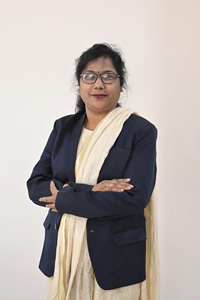
Dr Kalpana Malpe
Designation :- H.O.D. Computer Science and Engineering
Contact No:-
Email id:-
Qualification :-
Teaching Experience :
Industry Experience :
From The Head Of The Department
With every business and organization going digital, the IT sector today is a booming field as compared to other sectors and there is a huge demand of Computer Science Engineers and programmers. However, engineers who have pursued CSE will have an edge over engineers from other streams because of the knowledge and skills they gather in college. There is a huge scope of placements in CSE. In fact, it has taken the top position in placements as compared to the other fields. GWCET is one of the premier college in and around Nagpur region and is moving towards the goal of providing innovative and quality education with high standards to achieve academic excellence. It’s my pleasure to lead the department of CSE. The main objective of department is to develop the students both personally and professionally to achieve successful career in Industry, Research and Academics. The department has excellent infrastructure, well equipped laboratories. Innovative methods of teaching and learning process are adopted to achieve learning abilities through practice, exposure and motivation. Department also conducts student activities to improve their leadership qualities and technical skills. Faculty are also provided with a platform to upgrade their academic and technical skills by encouraging them to enhance their qualifications and also learn new technologies by participating in FDP’s, workshops, conferences and seminars. I feel it as a privilege to lead this department and also congratulate the faculty and students for their excellent performance. I will put all my efforts and give my best for the overall development of the department.
News & Updates
Dr Kalpana Malpe
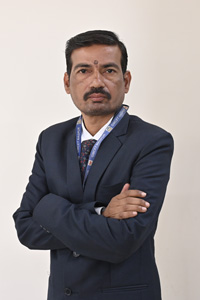
Prof Manoj Vairalkar

Prof Anjali Bhoyar
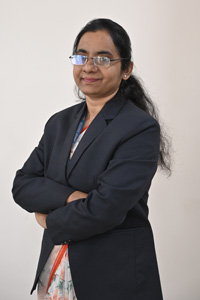
Prof Sheetal Zalke

Prof Ashwini Waghale
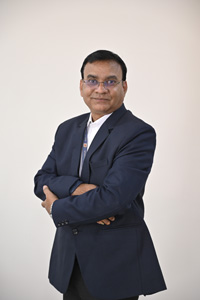
Prof Nitin Thakare
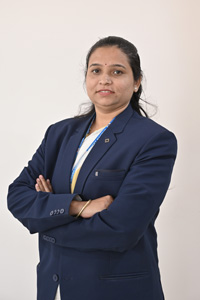
Prof Shubhangi Padole
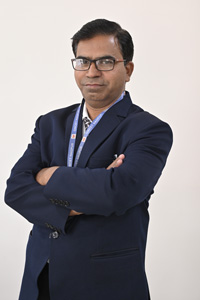
Prof Vivekanand Thakare
Programme Outcomes (PO’s)
Engineering Graduates will be able to:
PO1. Engineering Knowledge: Apply the knowledge of mathematics, science, engineering fundamentals, and an engineering specialization to the solution of complex engineering problems.
PO2. Problem Analysis: Identify, formulate, review research literature, and analyze complex engineering problems reaching substantiated conclusions using first principles of mathematics, natural sciences, and engineering sciences.
PO3. Design/development of solutions: Design solutions for complex engineering problems and design system components or processes that meet the specified needs with appropriate consideration for the public health and safety, and the cultural, societal, and environmental considerations.
PO4. Conduct investigations of complex problems: Use research-based knowledge and research methods including design of experiments, analysis and interpretation of data, and synthesis of the information to provide valid conclusions.
PO5. Modern tool usage: Create, select, and apply appropriate techniques, resources, and modern engineering and IT tools including prediction and modeling to complex engineering activities with an understanding of the limitations.
PO6. The engineer and society: Apply reasoning informed by the contextual knowledge to assess societal, health, safety, legal and cultural issues and the consequent responsibilities relevant to the professional engineering practice.
PO7. Environment and sustainability: Understand the impact of the professional engineering solutions in societal and environmental contexts, and demonstrate the knowledge of, and need for sustainable development.
PO8. Ethics: Apply ethical principles and commit to professional ethics and responsibilities and norms of the engineering practice.
PO9. Individual and team work: Function effectively as an individual, and as a member or leader in diverse teams, and in multidisciplinary settings.
PO10. Communication: Communicate effectively on complex engineering activities with the engineering community and with society at large, such as, being able to comprehend and write effective reports and design documentation, make effective presentations, and give and receive clear instructions.
PO11. Project management and finance: Demonstrate knowledge and understanding of the engineering and management principles and apply these to one’s own work, as a member and leader in a team, to manage projects and in multidisciplinary environments.
PO12. Life-long learning: Recognize the need for, and have the preparation and ability to engage in independent and life-long learning in the broadest context of technological change.
Programme Specific Objective (PSO’s)
The Students of Computer Science & Engineering will be able to-
PSO1: Understand, analyze and develop computer programs in the areas related to algorithms, system software, multimedia, web design, big data analytics, and networking for efficient design of computer-based systems of varying complexity
PSO2: Understand the evolutionary changes in computing, apply standard practices and strategies in software project development using open-ended programming environments to deliver a quality product for business success, real world problems and meet the challenges of the future.
Programme Educational Objectives (PEOs)
The Graduates of Computer Science & Engineering will be able to
PEO1: Apply knowledge across the disciplines and in emerging areas of Computer Science and Engineering for higher studies, research, employability, product development and handle the realistic problems.
PEO2: Have good communication skills, possess ethical conduct, sense of responsibility to serve the society and protect the environment.
PEO3: Possess academic excellence with innovative insight, soft skills, managerial skills, leadership qualities, Knowledge of contemporary issues and understand the need for lifelong learning for a successful professional career.