
Electronics & Telecommunication Engineering
The Department of Electronics and Communication came into existence along with the establishment of the institution in the year 2008. The Department of Electronics & communication is a prestigious one and one of the most sought after branch. It has always strived to deliver quality education keeping with the various emerging trends.
This field is one of the largest and fastest growing fields of engineering. It covers a wide range of applications which make our life easier and enjoyable such as television, radio, computers, telecommunication etc.
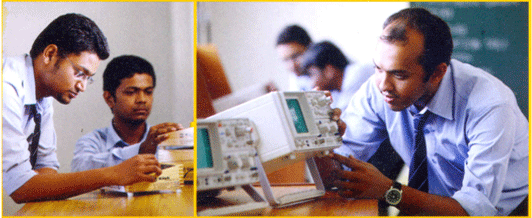
The Department has at its disposal well equipped labs to provide hands on experience and to realize the practical aspect of theory learned. It is actively involved in key research areas of communication engineering, VLSI design & micro processor based system design, with active interaction with the industry. Students are motivated & encouraged to participate in project competitions & Technical paper presentation.
Teaching Scheme
Syllabus
Academic Calendar
VISION:
The Department endeavors to develop technically competent, confident and socially responsible Electronics & Telecommunication Engineers
MISSION:
- To impart knowledge required for recent and advanced engineering & technology process.
- To produce graduates with technical expertise, professional attitude and ethical values.
- To inculcate in the graduates, the thirst for life-long learning and guide them to obtain thorough knowledge in their chosen interdisciplinary field

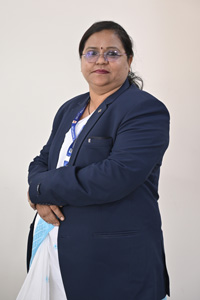
Dr Priti Bhagat
H.O.D. Electronics & Telecommunication Engineering Department
Contact No:- +91-9665503925
Email id:- sameer.ashtekar2007@gmail.com
Qualification :-
Teaching Experience :
Industry Experience :
From The Head Of The Department
A warm and affectionate welcome from the Department of the Electronics and Telecommunication Engineering of Govindrao Wanjari College of Engineering & Technology. Electronics Engineering is a dynamically changing and widening branch of the engineering profession, having applications in every discipline of engineering. It is the driving force behind rapid development in latest technological growth. Electronics and communication engineering provides excellent career opportunities in various sectors of Industries. The department has a fine blend of qualified and experienced faculty and staff members. We are continuously striving hard to improve upon the quality of education and maintain its position of leadership in engineering and technology. The Department is equipped with state of the art Laboratories to provide adequate opportunities for the students to learn and innovate new skills and ideas. The main goal of the department is to develop innovative professionals and researchers in line with the requirement of industry and research organizations. In GWCET we are committed to create an environment for the students where they can develop critical thinking and problem-solving skills. I am confident that the staff members and students would satisfy the responsibility and credibility of the department by showing a high level of professional competence in their respective domains.
News & Updates
Dr Priti Bhagat
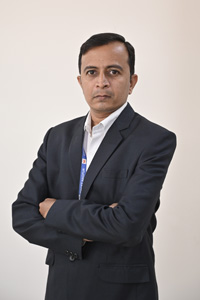
Mr. SAMEER B. ASHTEKAR

Prof. Padmini Kiran Chandanbatwe

Prof. Hemant Kadamdhad
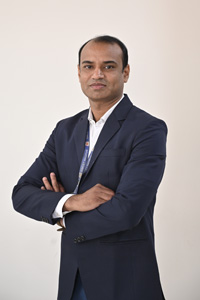
Prof. Dipak Bhongade
Programme Outcomes (PO’s)
Engineering Graduates will be able to:
PO1. Engineering Knowledge: Apply the knowledge of mathematics, science, engineering fundamentals, and an engineering specialization to the solution of complex engineering problems.
PO2. Problem Analysis: Identify, formulate, review research literature, and analyze complex engineering problems reaching substantiated conclusions using first principles of mathematics, natural sciences, and engineering sciences.
PO3. Design/development of solutions: Design solutions for complex engineering problems and design system components or processes that meet the specified needs with appropriate consideration for the public health and safety, and the cultural, societal, and environmental considerations.
PO4. Conduct investigations of complex problems: Use research-based knowledge and research methods including design of experiments, analysis and interpretation of data, and synthesis of the information to provide valid conclusions.
PO5. Modern tool usage: Create, select, and apply appropriate techniques, resources, and modern engineering and IT tools including prediction and modeling to complex engineering activities with an understanding of the limitations.
PO6. The engineer and society: Apply reasoning informed by the contextual knowledge to assess societal, health, safety, legal and cultural issues and the consequent responsibilities relevant to the professional engineering practice.
PO7. Environment and sustainability: Understand the impact of the professional engineering solutions in societal and environmental contexts, and demonstrate the knowledge of, and need for sustainable development.
PO8. Ethics: Apply ethical principles and commit to professional ethics and responsibilities and norms of the engineering practice.
PO9. Individual and team work: Function effectively as an individual, and as a member or leader in diverse teams, and in multidisciplinary settings.
PO10. Communication: Communicate effectively on complex engineering activities with the engineering community and with society at large, such as, being able to comprehend and write effective reports and design documentation, make effective presentations, and give and receive clear instructions.
PO11. Project management and finance: Demonstrate knowledge and understanding of the engineering and management principles and apply these to one’s own work, as a member and leader in a team, to manage projects and in multidisciplinary environments.
PO12. Life-long learning: Recognize the need for, and have the preparation and ability to engage in independent and life-long learning in the broadest context of technological change.
Programme Specific Objective (PSO’s)
PSO1: To apply concepts and knowledge in Electronics & Telecommunication Engineering to design a variety of complex modules in the areas of analog and digital electronics, signal processing, networking and communication.
PSO2: To solve emerging real-world problems related to communication and also to perform the maintenance of various electronic communication systems.
Programme Educational Objectives (PEOs)
The graduates of Electronics & Telecommunication Engineering will be able to
- Prepare with strong foundation of Electronics and allied subjects so as to excel in professional career and research.
- Provide technical solutions for real life problems that are socially and economically acceptable.
- Inculcate with good communication skills, ethical values and ability to work as a team.
- Develop with an attitude for continuous learning by updating their knowledge to meet the ever changing technical demand.